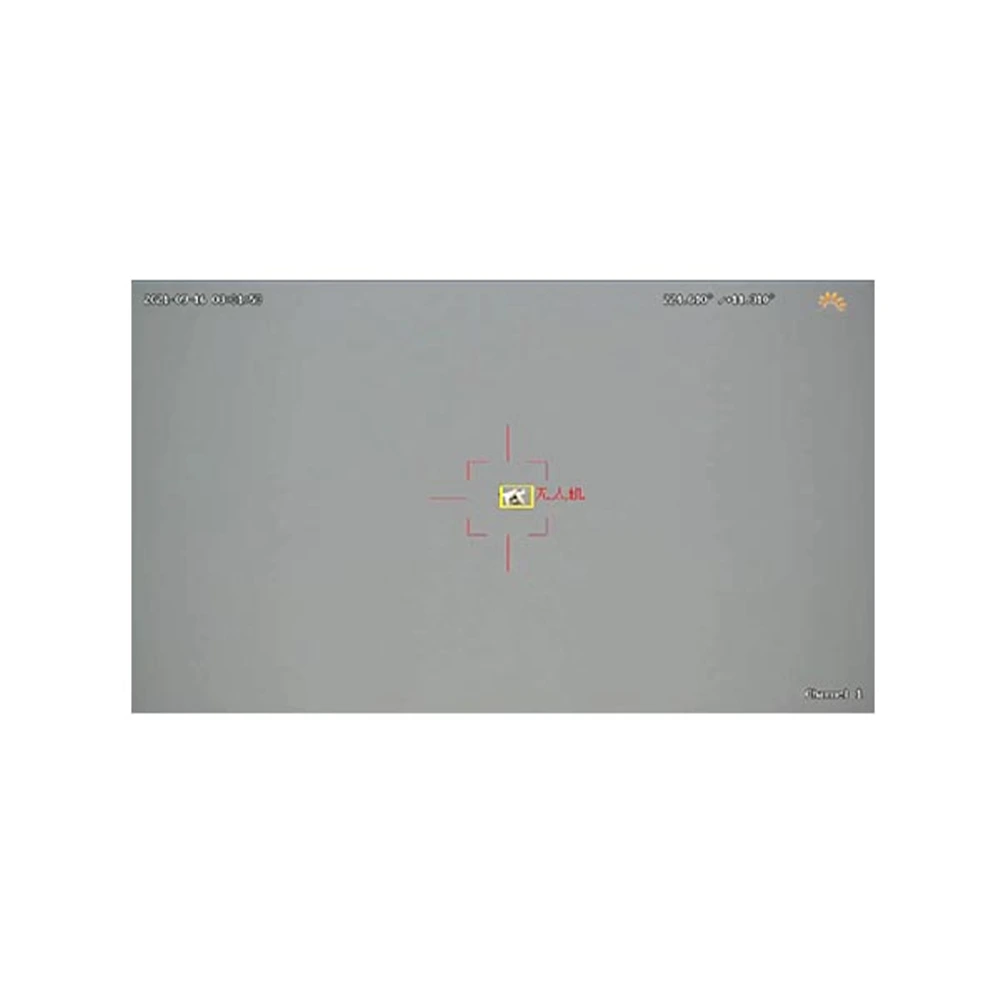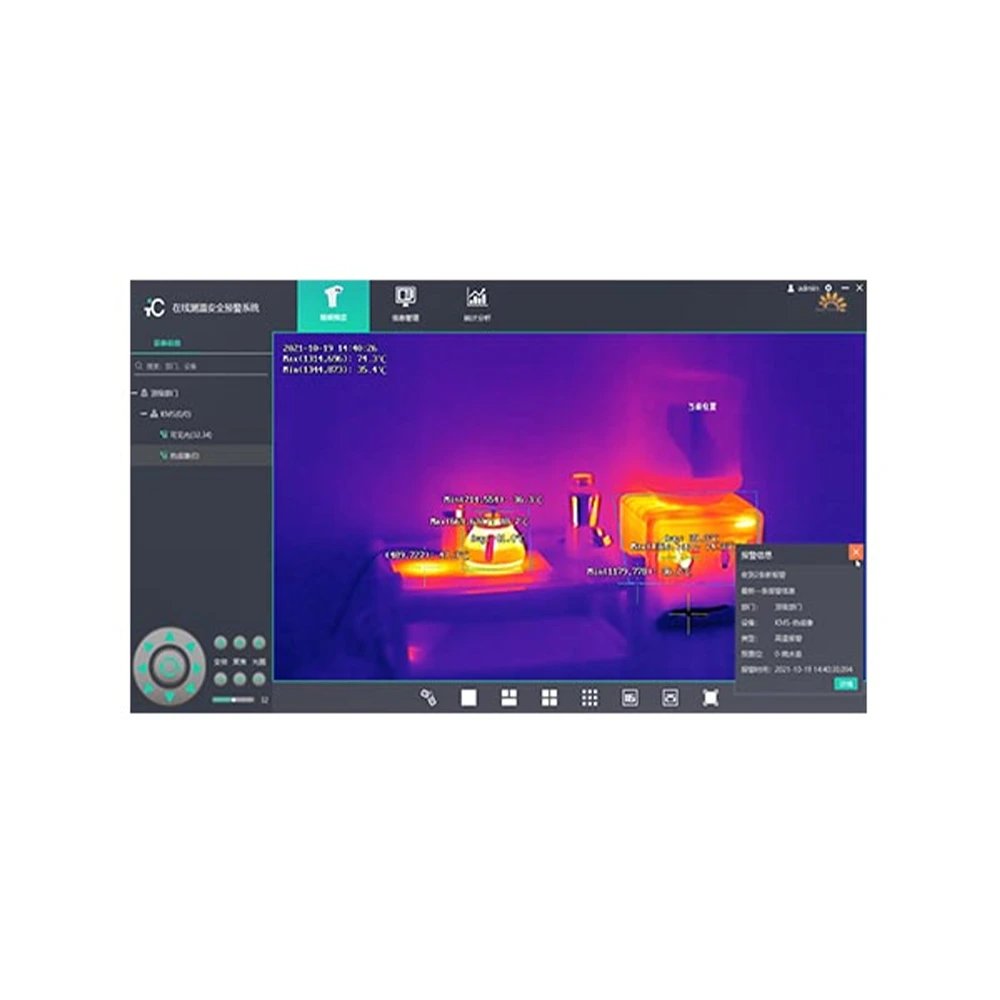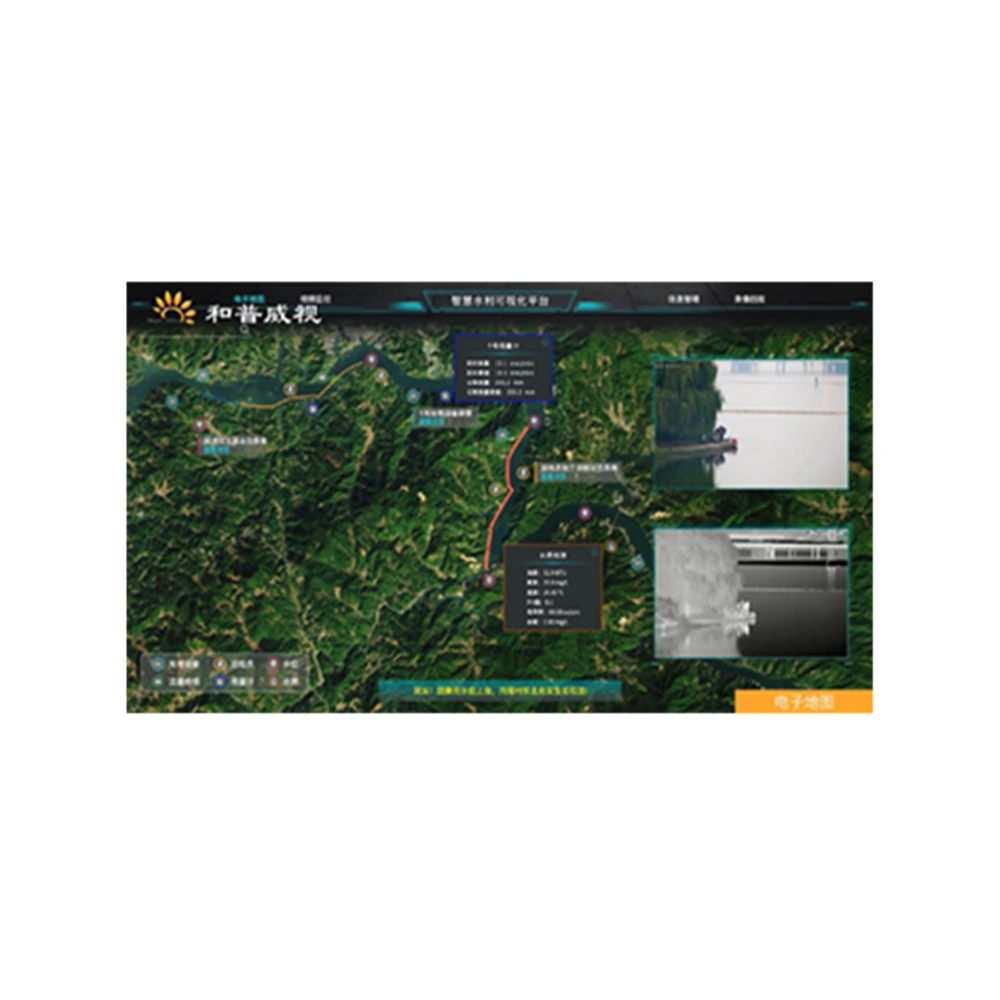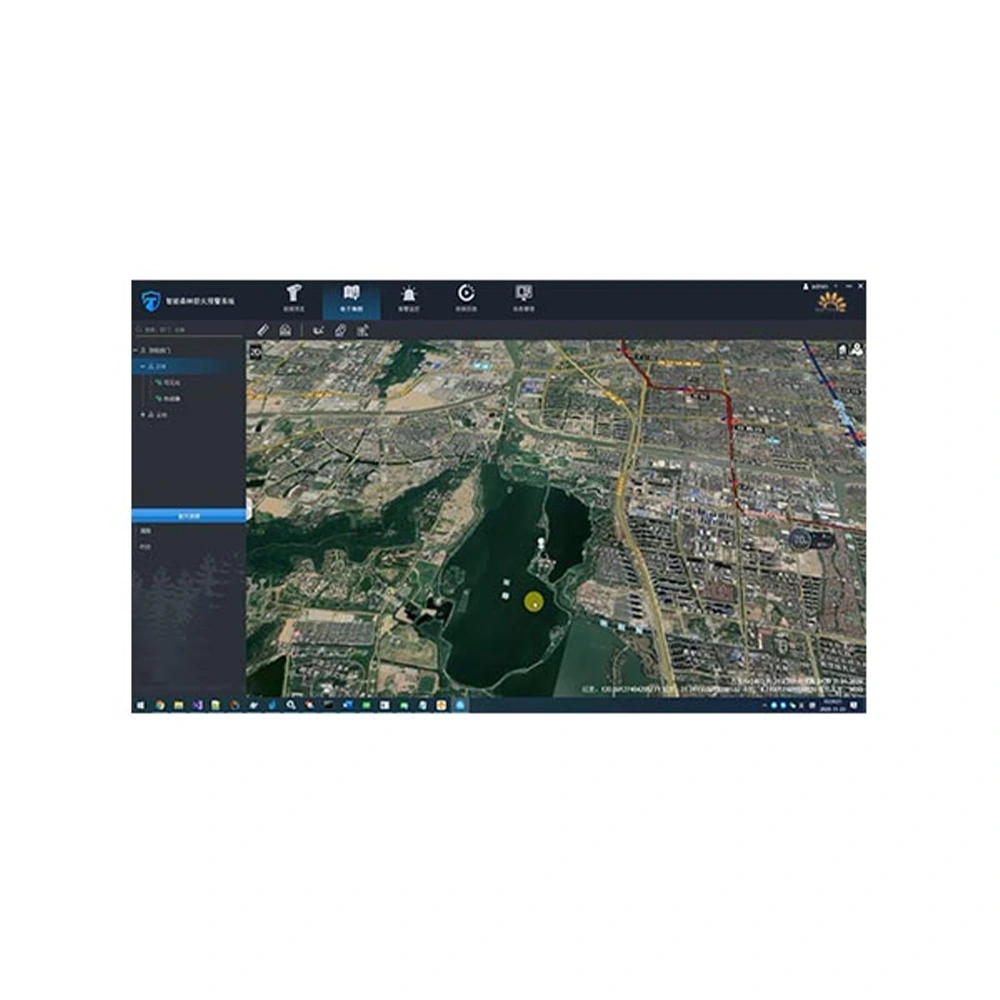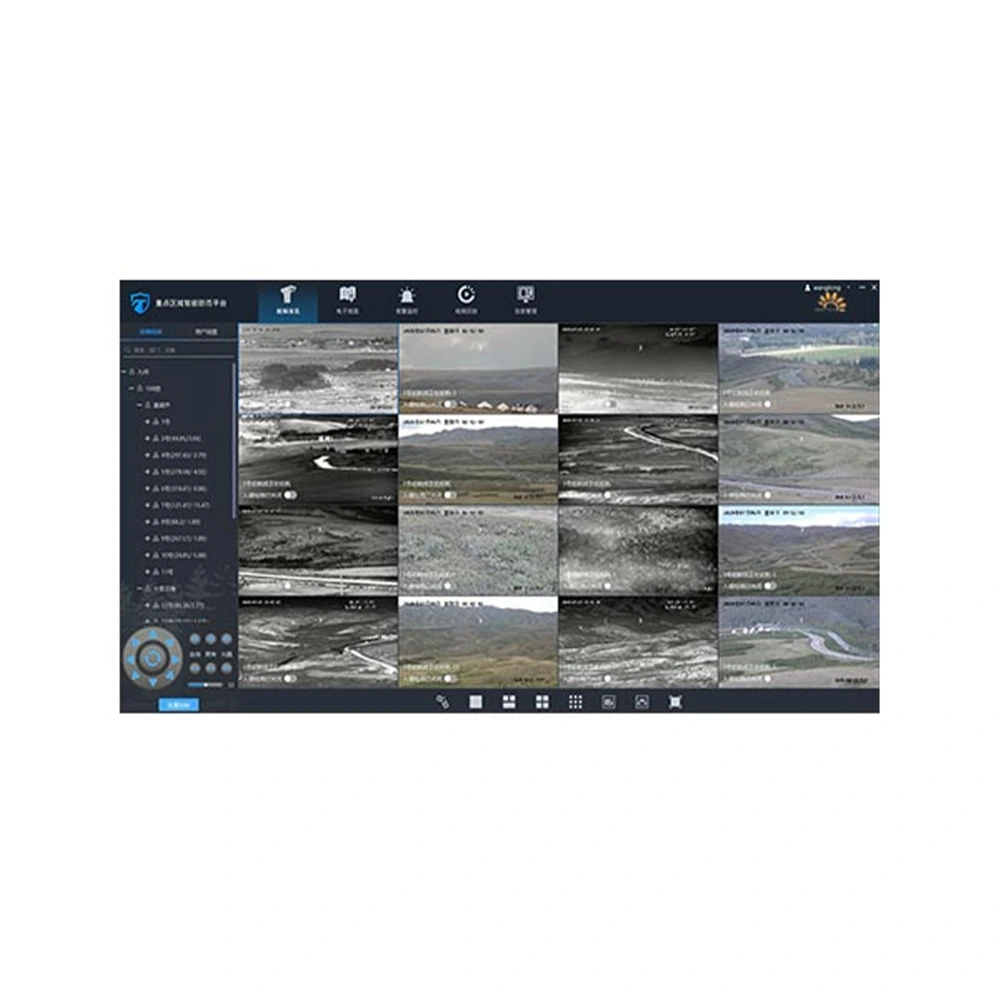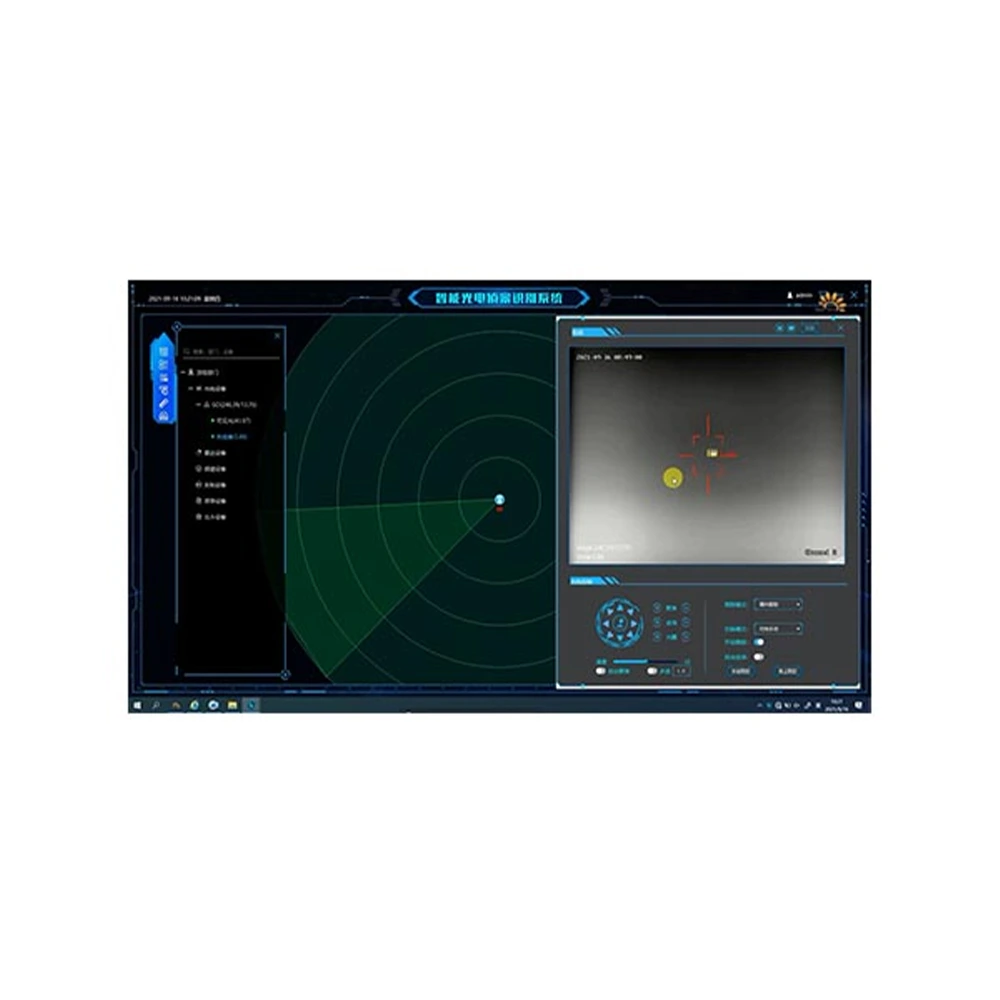

The RGS1000 Anti-Drone Automated Defense System is a comprehensive, visual anti-drone system integrating user management, video surveillance, target positioning, radar equipment management, spectrum equipment management, optoelectronic equipment management, and countermeasure equipment control. It is widely used in drone defense in various industries, including airports, prisons, nuclear, biological, and chemical bases, power plants, oil depots, water conservancy projects, and large plazas.
Supports unmanned operation in alert zone mode, photoelectric automatic cruise mode, and lightning guidance mode;
Supports detection of UAV targets using multiple methods such as radar, spectrum, and recognition algorithms; supports the fusion of multi-dimensional composite perception technologies for UAV targets;
Supports defense against UAVs using multiple technical means; supports interference, suppression, and deception of full-band radio signals and GPS signals using countermeasures guns and guidance devices;
Supports composite filtering and display of UAV targets using radar and spectrum detection data; supports deep fusion of target data from photoelectric analysis and information from lightning wave fusion;
Supports technical verification of UAV target information using front-end and back-end high- and low-level algorithm integration; supports preliminary target detection by low-computing-power chip algorithms at the front end, and accurate identification and automatic tracking of UAV targets by high-computing-power services at the back end;
Supports target detection and automatic tracking of low-altitude aircraft/airborne objects using visible light/thermal imaging video; supports enhanced system alarm accuracy through target recognition algorithms; supports target intrusion detection and electro-optical target tracking within the area; supports electro-optical cruise target detection, detected target tracking, automatic zoom-assisted recognition, and target recognition-assisted tracking.
Supports high-definition offline 2D electronic maps, 2D satellite maps, and 3D satellite maps; supports comprehensive situational awareness display of various information such as electro-optical, radar, spectrum, countermeasures, custom layer areas, target points, and target tracks based on 2D/3D maps; supports video pop-up observation of electro-optical devices and PTZ function scheduling; supports map-based countermeasures of electro-optical devices and target track-guided electro-optical observation.
Supports access to radar, spectrum, countermeasures, and other devices from different manufacturers and of different types; supports access to devices with custom standard protocols and extended access to new devices with proprietary protocols.
Widely used in drone defense in various industries such as airports, prisons, nuclear, biological, and chemical bases, power plants, oil depots, water conservancy projects, and large squares.
| Model Name | RGS1000 Anti-Drone Automatic Defense System |
| Optoelectronic equipment | Tracking photoelectric turntable, photoelectric pan-tilt head |
| Detection and defense | 1. Target Detection: Supports access to UAV target information detected by radar; supports access to UAV target information detected by spectrum. 2. Target Tracking: Supports real-time radar-guided electro-optical observation and search, and real-time radar-guided electro-optical tracking. 3. Target Recognition: Supports algorithmic recognition of UAVs during electro-optical tracking; supports automatic transition to electro-optical tracking during electro-optical scanning. 4. Target Handling: Supports countermeasures and guidance using UAV countermeasure guns; supports interception, engagement, and guidance of UAV targets; supports simultaneous engagement across multiple frequency bands and rapid engagement from a fixed direction. 5. Supports fusion display of target data from radar and spectrum detection. |
| Video surveillance | 1. Video Preview: Supports single device connection, batch connection, and drag-and-drop connection; supports single device disconnection and all device disconnection. 2. PTZ Control: Supports eight-directional PTZ control; supports zoom, focus, and aperture lens control; supports horizontal angle positioning, tilt angle positioning, and field of view angle positioning; supports 3D click positioning and bounding selection zoom positioning for optoelectronic devices. 3. Preset Positions & Patrol: Supports hardware preset positions, software preset positions, and preset position monitoring. 4. Remote Configuration: Supports remote power on/off, restart, thermal imaging power on/off, image stabilization adjustment, and remote parameter setting for optoelectronic devices. |
| Intelligent algorithms | 1. Drone Recognition: Supports target detection for multi-rotor and fixed-wing drones using visible light and thermal imaging video; supports target recognition algorithms for drones to improve alarm accuracy. 2. Airborne Object Recognition: Supports target detection for airborne objects such as balloons and kites using visible light and thermal imaging video; supports target recognition algorithms for airborne objects to improve alarm accuracy. |
| Map situation | 1. 2D Map: Supports offline high-definition 2D maps; supports switching between electronic maps, Google satellite imagery, Tianditu (a Chinese online map platform), and vector maps; 2. 3D Map (Optional): Supports 3D rendering display of satellite maps; supports transitional switching between 2D and local 3D maps; |
| External devices | 1. Supports access control for radars from major domestic manufacturers; supports automatic calibration of radar and photoelectric devices (invention patent). 2. Supports access control for various spectrum devices. 3. Supports access control for various countermeasures and guidance devices. 4. Supports access to data from electronic compasses, laser ranging, etc. |
| Interface Protocol | 1. Access Protocol: Supports radar and spectrum access via custom standard protocols; supports protocol interoperability with radar, spectrum, countermeasures, and guidance equipment. 2. Secondary Development: Supports target information reporting and control via custom standard protocols; supports secondary development of custom protocols. |
1. Understand Your Product Requirements
2. Evaluate Industry Experience
3. Review Successful Case Studies
4. Consider After-Sales Service
PTZ devices are typically equipped with various devices, including optical lenses (such as infrared cameras), acoustic sensors, radar, antennas, lighting searchlights, etc.
We are the direct factory, of course,it's competitive, quality/price and services are guaranteed.
Yes. Welcome at any time.

Copyright © 2026 by KONWER Technology Co., Ltd. All Rights Reserved