With the rapid development of the aviation industry, airports, as critical transportation hubs, have become increasingly important in terms of safety. According to statistics from the International Civil Aviation Organization (ICAO), over 20,000 "bird strike" incidents occur globally each year. The International Air Transport Association (IATA) classifies "bird strikes" as a Class A aviation disaster. Two recent severe air crashes—one in the volatile airspace of Russia and the other in the economically developed South Korea—have drawn significant attention, particularly the crash of a Boeing 737-800 passenger aircraft at Muan International Airport in South Korea.
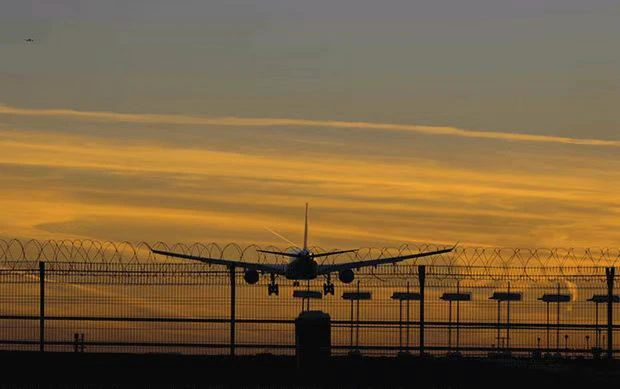
As common biological groups in nature, the low-altitude flight activities of birds also pose a significant and unavoidable threat to airport safety. Bird strikes are a major concern in aviation safety. They can damage aircraft components and affect normal flight operations. In extreme cases, bird strikes may cause aircraft engine failure or damage, leading to loss of power and resulting in serious air disasters.
With the rapid advancement of technology, aircraft flight safety monitoring technology has also progressed continuously. However, currently, the commonly used low-altitude radar monitoring methods in the market have shortcomings such as poor accuracy in near-air areas and large blind spots. As airport safety management requirements increase, a single technological approach can no longer meet market demands. By combining low-altitude radar with high-precision infrared optoelectronic monitoring equipment, accurate surveillance and identification tracking of low-altitude targets can be achieved, effectively compensating for the limitations of single-technology solutions.
System Introduction:
Hopewells' Low-Altitude Security Management System utilizes technologies such as high-precision servo tracking guided by radar data, artificial neural networks, and long-distance telephoto accurate focusing. It provides users with effective real-time video images, real-time intelligent target identification results, and full-process video recording.
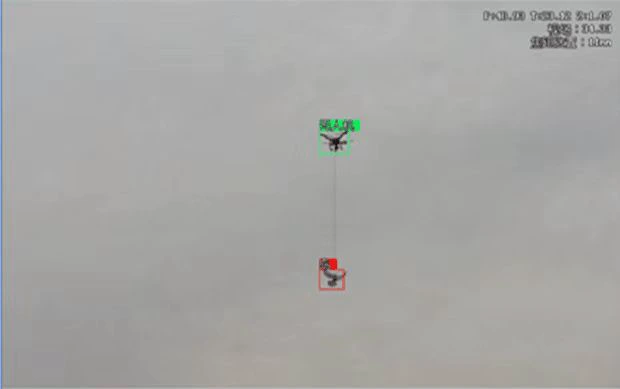
Target Classification and Identification Results
The system features all-weather operation, long surveillance distance, clear images, excellent tracking performance, high intelligence, and simple operation. It can automatically monitor the flight conditions of drones, birds, and other low-altitude, slow-moving, and small targets within the system’s deployment area using all-weather and multi-method approaches. It also reports suspected targets in real-time and accurately locates and tracks them. By employing a multi-method comprehensive interception approach, it avoids secondary damage during target interception, ensuring safe interception. The system meets the low-altitude security prevention and control needs of key areas such as critical zones, airports, prisons, and large event venues.
System Functions:
(1) During the day, high-definition visible light cameras are used to achieve precise identification and tracking of drones, birds, and other "low, slow, small" targets.
(2) At night or under low-visibility conditions, infrared thermal imagers are used to achieve precise identification and tracking of drones, birds, and other "low, slow, small" targets.
(3) Artificial intelligence image recognition technology enables automatic identification of drones, birds, and other "low, slow, small" targets.
(4) The equipment can be manually controlled or operated based on programmed control. The focal length can be manually adjusted or automatically controlled based on target size.
(5) High-definition, high-frame-rate cameras capture the flight status of birds and other targets, precisely locating the positions of interfering targets such as birds.
System Features:
(1) Excellent Tracking Performance
The system’s intelligent image processing component employs advanced algorithms, with a focus on enhancing adaptability calculations for automatic tracking in complex and changing backgrounds. It maintains stable tracking even when drones or birds undergo rapid changes in trajectory and demonstrates excellent tracking capability for distant targets, which may appear as weak, small, and slow-moving. It ensures continuous and stable tracking and identification of targets during sustained maneuvers.
(2) High Level of Intelligence
Through research and exploration of neural network technology, Hopewells has achieved tracking of drones, birds, balloons, and other aerial objects, as well as identification of various targets. Currently, by collecting and annotating extensive low-altitude target data and conducting algorithm research, an algorithm model for low-altitude target identification has been trained and preliminarily tested and validated. It can identify drones, birds, balloons, kites, and other low-altitude, slow-moving, small targets.
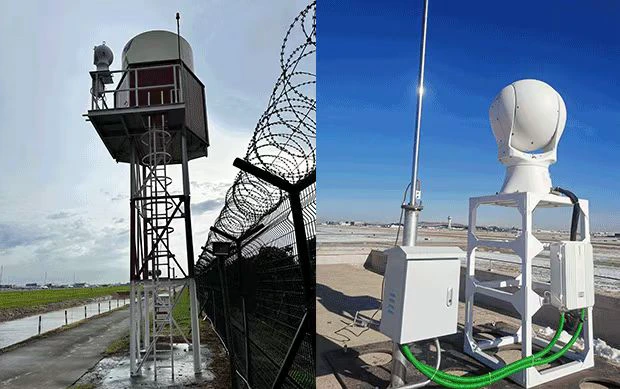
Currently, Hopewells' Low-Altitude Security Management System is widely used in the aviation sector. It has been successfully implemented in large international airports such as Hong Kong International Airport, Guangzhou Baiyun International Airport, Xi’an Xianyang International Airport, Tibet Longzi Airport, and Harbin Taiping International Airport. Additionally, it has been extensively applied in low-altitude prevention and control efforts in key cities and critical areas across China, including Beijing, Shanghai, Shenzhen, and Qingdao. This system injects strong momentum into the high-quality development of the national low-altitude economy and provides robust support for the safe and stable development of the low-altitude sector.

Copyright © 2026 by KONWER Technology Co., Ltd. All Rights Reserved